
Skip to content

The Institute for the Promotion of Teaching Science and Technology (IPST)

IPST

The Institute for the Promotion of Teaching Science and Technology

ABOUT IPST


The Institute for the Promotion of Teaching Science and Technology (IPST) is an autonomous agency under the Ministry of Education, responsible for the development and improvement of national curriculum, educational media and tools, standard and quality assessment on science, mathematics and technology education at the basic education level. IPST is also tasked with re-training teachers and students, promoting talents and advising science, mathematics and technology education policy.
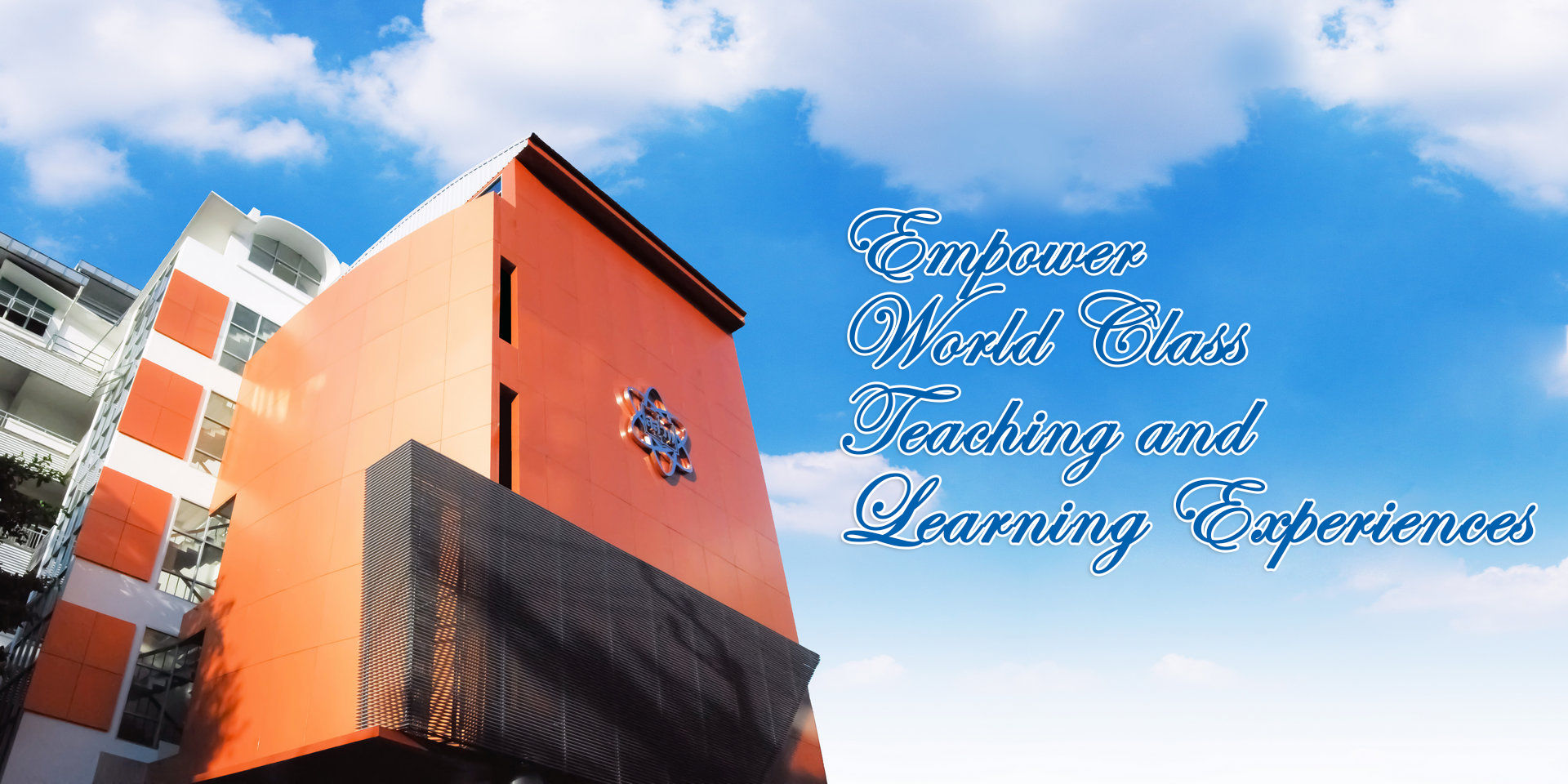
IPST works closely with a wide range of stakeholders including government education authorities, teachers, principals, students, community and general public to ensure the comprehensive, efficient and sustainable science learning and teaching, and cultivate the scientific thinking culture in our children. IPST partners and collaborates with regional and international organizations as well as individual science and mathematics educators and professionals in sharing knowledge and best practices to continuously improve Thailand’s science education to world-class standard.

HISTORY

The Institute for the Promotion of Teaching Science and Technology (IPST) was established on 16th January 1972 by the Announcement of the National Executive Council no. 42 dated 16th January 2515 B.E. The initial funding and technical support came from the United Nations Development Programme (UNDP) with precise objectives to made science curricula more responsive to the needs of the modern economy, increase the effectiveness of the methods of learning and develop training program focused on enhancing skills appropriate to modern methods of teaching and learning. Then by virtue of the Institute for the Promotion of Teaching Science and Technology Act 2541 B.E. (1998), and amended in 2548 B.E. (2005) (second issue), IPST has become an autonomous entity with the budget support and policy guidance from the Ministry of Education.An autonomous entity with budget support and policy direction from the Ministry of Education.

STATUS

An autonomous entity with budget support and policy direction from the Ministry of Education.

VISION


MISSIONS


CORES VALUES

Strategy 1
Develop science, mathematics and technology (SMT) curricula, learning materials and learning processes that emphasize on hands-on learning and enhancing better understanding among students with various learning abilities through the use of technology

Strategy 2
Drive and upgrade SMT teaching and learning through IPST’s network to ensure quality of SMT education nationwide

Strategy 3
Promote SMT teaching and learning processes that highlight on hands-on activities and provide practical understanding among the learners for both formal and informal education

Strategy 4
Commit in the development and promotion of SMT talents to become future manpower for national development in support of Thailand 4.0 national policy

Strategy 5
Reform corporate image and constantly works alongside stakeholders to strengthen IPST’s position as a transformational leader in SMT education

  • Short-term (2010-2011) – maintain the same level of national test score
  • Medium-term (2012-2016) – increase the national test score by more than 50%
  • Long-term (2017-2027) – increase the national test score by more than 60%
    The International test score stands above average, or within top ten world ranking

CURRICULUM AND LEARNING ENVIRONMENT
IPST specifies learning standards and indicators for science, mathematics, technology and information technology design in accordance with the core basic education curriculum.

PROFESSIONAL DEVELOPMENT
To raise the quality of science, mathematics and technology learning, IPST develops standard teacher training curriculum and organizes nation-wide teacher training applying different methods from face-to-face to distant training via satellite. In cooperate with the Distance Learning Foundation and the Educational TV, IPST conducts distant training via satellite and the Internet. Collaboration with networks abroad has benefited IPST in its attempt to create a cadre of master trainers and academic mentors to assist and exchange knowledge with teachers. IPST also organizes symposia in cooperation with various educational institutions.

MEDIA AND EQUIPMENT
Development of textbooks, teacher’s guides, teacher training materials, teaching kits, supplementary materials, and digital media such as CD-ROMs, e-books, learning objects, posters, games, learning-teaching illustrations, videos and scientific laboratory equipment prototypes is a part of IPST’s regular activities.

LEARNING STANDARDS
IPST is entrusted with standard setting. Therefore, IPST specifies teaching-learning standards, develops assessment and evaluation instruments and manuals such as learning achievement tests, learning deficiency analysis instrument, efficiency assessment form, thinking capability measurement test, scientific mind and metacognition measurement instruments. In addition, IPST has developed efficiency assessment instruments for primary and lower secondary science and mathematics teachers and has trained science and mathematics teachers to use the instrument and the evaluation techniques.
These standards and instruments are used by agencies concerned such as the National Institute of Educational Testing Service (NIETS) and the Bureau of Educational Testing.

EDUCATIONAL RESEARCH
Through international cooperation, IPST has organized research on curriculum, use of materials and equipment, and school learning environment. At international level, IPST participates in international science, mathematics and technology education research projects such as the Trends in International Mathematics and Science Study (TIMSS), the Programme for International Student Assessment (PISA), and the Teacher Education Development Study in Mathematics (TEDS-M).

PROMOTION OF EXCELLENCE
IPST supports capacity buildings for talented mathematics, science and technology students and teachers by selecting the best among them to participate in projects such as the National and International Mathematics and Science Olympiads, the Development and Promotion of Science and Technology Talents, the Outstanding Science and Mathematics Teacher Production Promotion Project, the Development of Science and Mathematics Excellence, and the Special Science Classroom Project.

SCIENTIFIC LITERACY
In addition to in-school science, mathematics and technology education, IPST – as a science education institute – assumes the responsibility for raising scientific literacy of Thai public through implementation of various activities such as science exhibition, science film festival, and radio and TV science programs.

IPST’s network of collaborators and partners cover the whole gamut of education players: students, teachers, parents, school administrators, including local, national and international education agencies and institutions, foundations, and the private sector. IPST has entered collaborative development in education with the following partners:

  • The Office of H.R.H. Princess Maha Chakri Sirindhorn’s Projects: to enhance capacities of science, mathematics and technology teachers in Border Patrol Police schools, remote schools, monastic schools attached to the Development of Children and Youth in Isolated and Remote Areas Project initiated by H.R.H. Princess Maha Chakri Sirindhorn.
  • The Office of the Basic Education Commission, the Office of the Higher Education Commission: to enhance capacities of teachers and educational personnel for upgrading of science, mathematics and technology learning quality during 2007-2011.
  • The Sirindhorn Observatory of the Northern Astronomy Study Centre, Chiangmai University: to provide financial support to training activities in Astronomy and Space as well as to establish an astronomy information network for schools throughout the country
  • The Sirindhorn International Environmental Park Foundation under the patronage of H.R.H. Princesss Maha Chakri Sirindhorn: to cover cost of construction of the science, mathematics and technology teacher training centre in the compound of the Sirindhorn International Environmental Park, Cha-am District, Petchburi Province.
  • Schools attached to the Office of the Basic Education Commission, the Office of the Higher Education Commission, and local governmental offices: to provide financial support to science learning resource centres in Cholburi, Saraburi, Kalasin, Chieng Rai, and Suratthani provinces.
  • Information Technology Network for Learning in the Special Administrative Zone in southern border provinces.
  • Foreign Institutions: to strengthen capabilities of IPST staff and science, mathematics and technology education personnel.

Message us